
Dealing with knee pain while running is no fun, but being a runner doesn’t have to be! We’ll look at the best running shoes for knee pain, as well as some things that can help.
Knee pain can happen to anyone, runner or not. We all know that the favorite question of non-runners is, “Do your knees hurt?” Or they like to say they can never run because their knees already hurt.
But the truth is that running itself isn’t inherently bad for our knees. Usually it’s our poor choices. Running too fast, wearing the wrong shoes, and weak muscles from refusing to power train are some of the common reasons why runners can develop knee pain.
Try: Joomra Women's Trail Running Barefoot Shoes Zero Drop Minimalist Sneakers

In most cases, knee pain does not mean that your knees are bad and is not permanent. It’s important to find the cause and then the solution to get you back on the road and trails faster.
However, when you’re upping your mileage or dealing with an ailment, why wouldn’t we take advantage of gear to make things feel better?!
I’ve compiled a list of some of the best shoes out there to help those struggling with knee problems. Stick with me as we look at some of the causes of knee pain, how much cushioning can be too much, how to choose the right shoes, and my recommendations for shoes you might want to check out.
Why do your knees hurt when you run?
I have done a great article. 7 Causes of Knee Pain While Running To help you see what’s going on and fix it. But for a quick overview:
- Weak hips and glutes. They may not be able to help you maintain proper alignment.
- Overstriding. You may be reaching when you run with your feet in front of your body.
- Excessive use. Your feet are rolling inwards.
- Supination. Your feet are rolling outwards.
- Improper running shoe fit. Yes, you may be in the wrong shoes for your body and feet.
- Cracked shoes. Wearing shoes that have seen too many miles means that the shoe is broken in and your shape is broken.
It is important to determine the cause of your knee pain before proceeding further.
Shoes aren’t cheap and while you can often return them if they aren’t the right shoe for you, you don’t need to do it multiple times because changing shoes is only masking the problem and not solving it. Is.
If your knee pain is caused by weak hips and glutes, changing shoes won’t help. You will first need to strengthen these muscles to help you maintain proper alignment while running. I have done several posts on strengthening these muscles and they are great recovery and pre-hab exercises for all runners.
If you’re overshooting, it’s time to look at your form as a whole. Again, you’re in luck because I have a post highlighting 4 ways you can improve your running form that touches on overstriding.
When it comes to pronation, whether it’s overpronation or supination, sometimes it’s a biomechanical problem and sometimes it’s the wrong shoes. Regardless, they can cause knee joint pain and other problems with the lower legs, including ankle, foot, and hip pain, shin splints, IT band syndrome, and the dreaded plantar fasciitis.
How to find the right shoes for knee pain
Once you’ve determined the cause and solution to your knee pain, it’s time to find the right shoes. You want to consider a number of factors, including your foot and arch, comfort, support, cushioning, materials used, and sizing options.
How much cushion is too much?
You might think the more cushion the better. After all, runners’ knees, feet and other joints have to absorb a lot when we run. And there are plenty of shoes on the market that have plenty of cushioning! But more cushions are not always a good option.
Some studies show that too much padding does not reduce the risk of injury and may lead to more injuries rather than fewer.
For example, A 2018 study It found that more shoes “can alter spring-like running mechanics and increase rather than decrease impact loading.” Increased impact loading was attributed to a stiffer leg during each landing. It was compared to a standard running shoe.
That doesn’t mean extra cushion is a bad thing for everyone. We are all individuals so you have to find the right shoe for you!
8 Best Running Shoes for Knee Pain
Below are our top picks for the best running shoes when dealing with knee pain. Remember, there are many factors to consider so keep them in mind when choosing a shoe. Your next pair might be one of the ones reviewed below.
Best for Max Cushion – Huka Win Win Bondi 8
The Huka One One Bondi is perfect for everyday running and walking. With its maximum cushioning, it is also almost guaranteed to provide maximum comfort.
The latest model features mesh construction, lightweight foams, and an extended heel that offers a soft yet balanced roll from heel strike to pushoff. Just remember as we mentioned earlier that more cushion is not always better.
So this is one of the shoes in my rotation for recovery runs, but not for everyday.
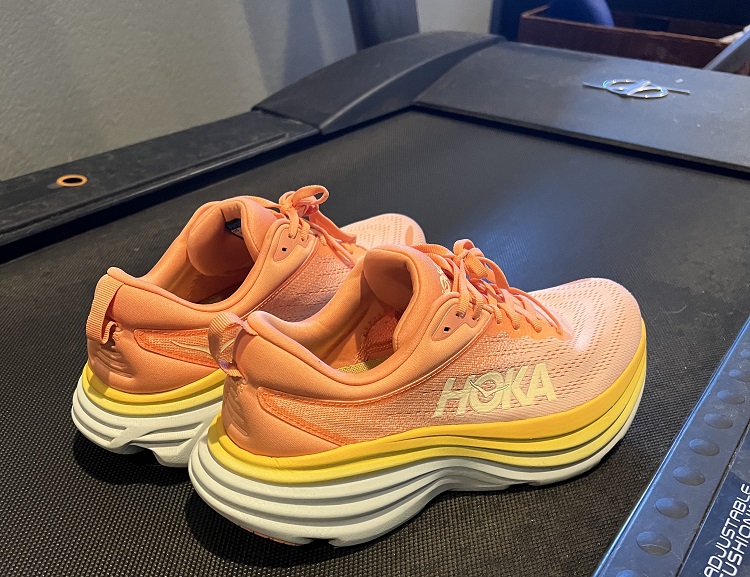
- neutral
- 4 mm heel drop
- Maximum cushion
- 8.9 oz (Women’s)
- $165
Best for flat feet – Asics Gel Kayano 29
Another great option, but especially for those with flat feet or those with overgrowth, is the Asics Gel Kayano. The shoe offers excellent heel cushioning to absorb impact, but still allows for a great toe-off.
The Keano also provides some stability in the midsole to prevent the foot from rolling inward during each step. It is also known for its durability and will last you, literally, a long time.
The Keano, with its mesh upper, comes in different widths, sizes and color combos.
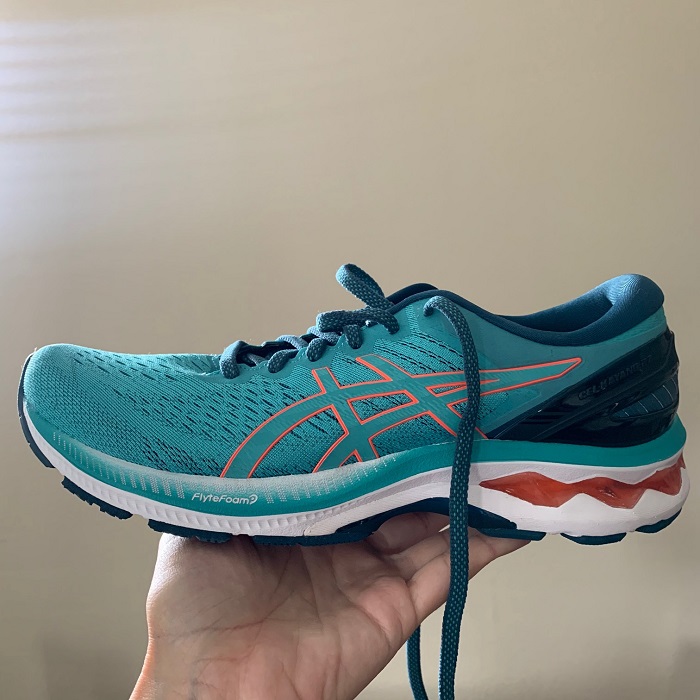
- Neutral/High Breeding
- 10mm heel drop
- Maximum cushion
- 9.5 oz (Women’s)
- $160
Best for long-distance running shoes – Saucony Triumph 20
The Triumph is Saucony’s most cushioned shoe. It promises extra cushioning and a springy feel that enables you to push forward with power but land quietly and softly.
Whether you’re heading out for a 5k or your 20-mile run, this shoe provides the comfort and support you need, especially on days when your legs are feeling a little more than usual.
Another bonus? It comes in 13 colors!
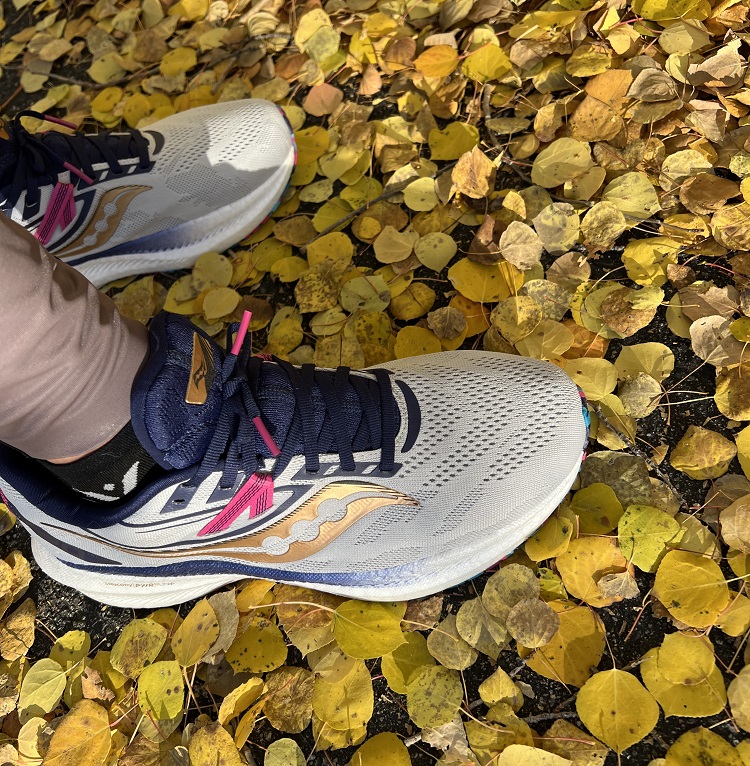
- neutral
- 8 mm heel drop
- Maximum cushion
- 9.1 oz (Women’s)
- $159
Feel free to buy older models at a lower price! This is what I think has been the case and you will enjoy.
Best Support Shoe – Brooks Adrenaline GTS 22
Among stability shoes, the Brooks Adrenaline GTS is a great option. It’s been a runner’s favorite for over 20 years, if that tells you anything.
It’s great for a daily run or a long run on the weekend. It has a nice solid structure that offers flexibility for people with high arches, but can also be a solid option for flat feet with a special insert. Its guide rails support system helps your foot move naturally with each step.
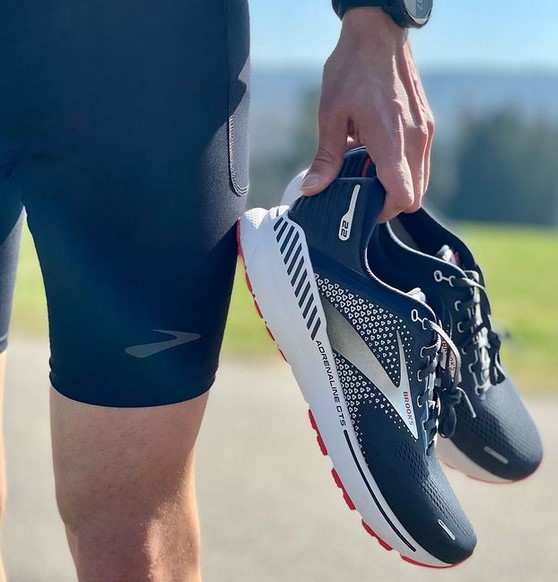
- support
- 12 mm heel drop
- Maximum cushion
- 9.0 oz (Women’s)
- $140
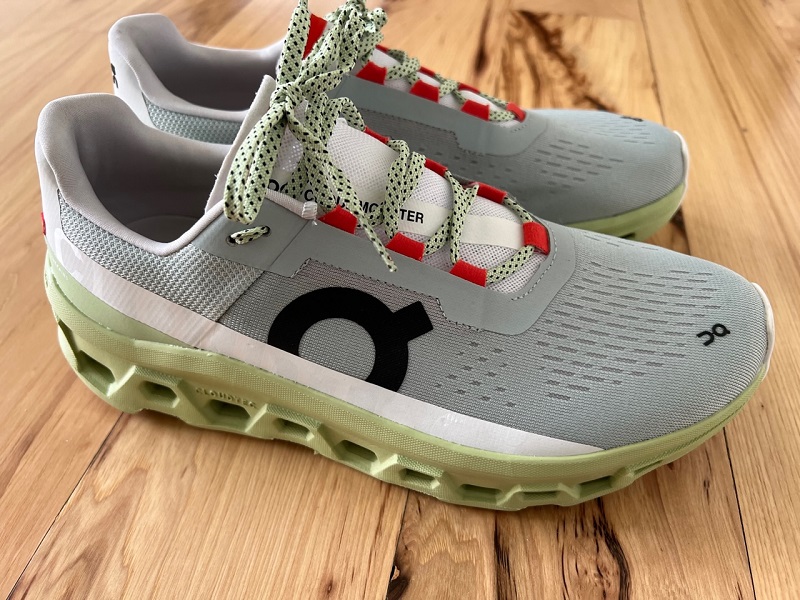
Best Neutral Cushion Shoe – On Cloud Monster
Of the shoes listed here, these are by far the lightest but can also accommodate the thickest soles. In this shoe, OnCloud has expanded its “clouds” to provide maximum cushion.
A unique feature of the shoe is the upward angle of the toe box area. This feature helps prevent the feeling of sinking into the ass and helps the shoe provide a bouncy push-off.
- neutral
- 6 mm heel drop
- Maximum cushion
- 8.11oz (Women’s)
- $169
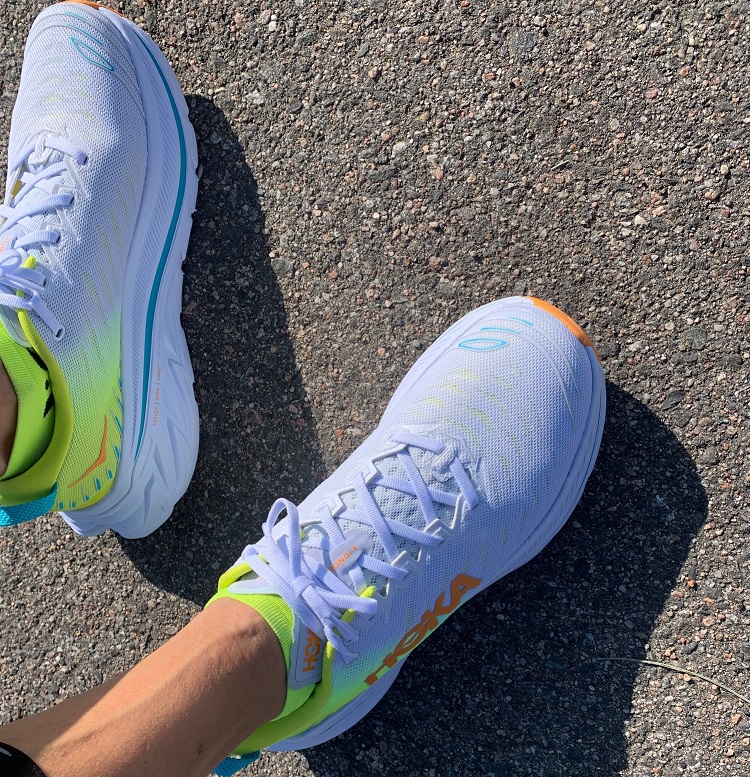
Best for carbon fiber plan – Hookah Bondex
Carbon fiber plates can actually provide some beneficial lower leg stability resulting in less pain. Surprised? Most people think of them only for speed, but like an insole they provide support that prevents the foot from rolling too much.
This particular model is one that I definitely enjoy running. You get the cushion of a Bondi, but with more responsiveness. It can definitely make some long runs feel even better.
- neutral
- 5mm heel drop
- Maximum cushion
- 9.0 oz (Women’s)
- $215
They also have Carbon X if you want less cushion. Check out Bondi X vs Carbon X >>
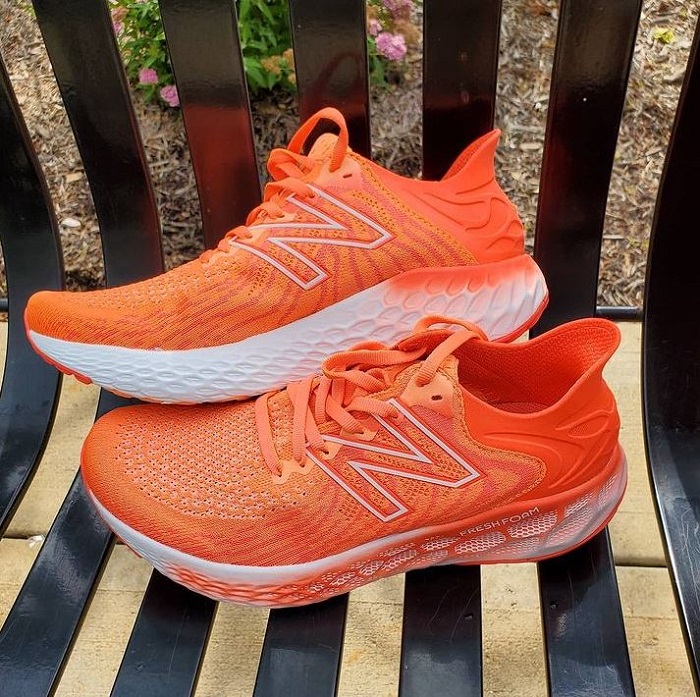
Best for wide feet – New Balance Fresh Foam 1080W
While these may be the heaviest shoes on this list, the fresh foam through the midsole provides the comfort you want without feeling bulky. I can’t say I feel any weight in them at all.
The latest version of the shoe, the 12, is slightly lighter and has a textured upper, which makes the shoe feel like it’s hugging your foot a little more.
This is another really breathable shoe, which comes in a variety of colors.
- neutral
- 12 mm heel drop
- Medium cushion
- 10.3 oz (Women’s)
- $160
Buy the old model to pay a million percent less! They still feel great.
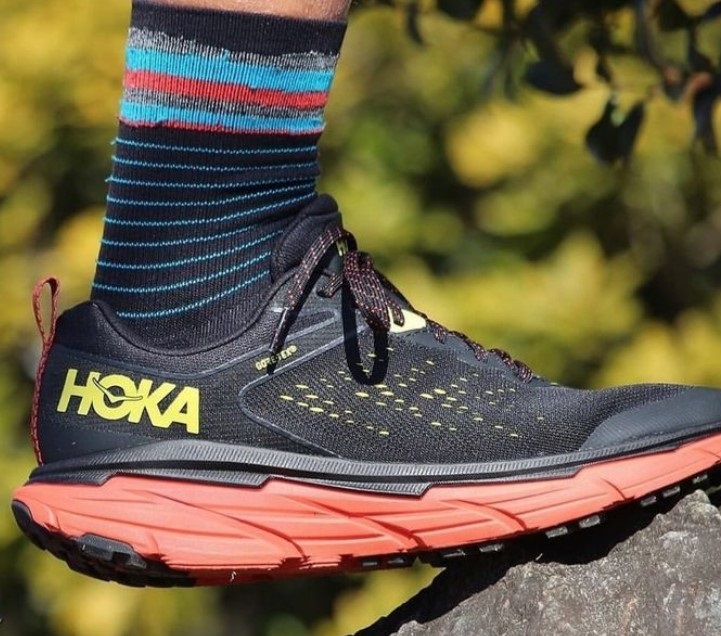
Best for trails – The Hookah Challenger
The Huka Challenger is an all-terrain shoe that allows you to seamlessly transition from the road to the trails. While not as plush as its sibling the Bondi, its padding gives you shock absorption while remaining light enough for the demands of trail riding.
Again this is not a stability shoe, but default HOKA shoes provide more stability than most.
The sole features 4mm lugs that ensure good grip on the trails, but are small enough that they won’t feel jittery on the road.
- neutral
- 5mm heel drop
- Medium cushion
- 8.1 oz (Women’s)
- $140
The sheer number of trainers on the market these days can make shoe shopping overwhelming, especially when trying to deal with a specific problem like knee pain. Obviously, this is not an exhaustive list, but hopefully it will give you, at least, a place to start your search.
For more help choosing the right shoe for you, don’t worry, I’ve got you covered:
Other ways to connect with Amanda
Instagram Daily Fun: RunToTheFinish
Facebook Community Chatter: RunToTheFinish
Sign up to receive a weekly newsletter with top running tips. And laugh


0 Comments