
A strong and healthy back reaches more than you can lie down. This includes a solid range of motion, proper posture, identifying weaknesses or imbalances, and correcting them. There are 40 large and small muscles in the back starting from the top of the neck to the tailbone. When something goes wrong, it can sometimes be difficult to pinpoint the culprit. But not in the case of winged scapula.
A winged scapula, (although this should be treated to prevent further pain or injury), is easy to identify. And with a little help from a qualified physical therapist, a stretched scapula and the surrounding affected muscles can be corrected and strengthened.
Scapula Anatomy Facts You Probably Didn’t Know
Shocking to most, the scapula is very unstable by nature. “In fact, its only attachment to the anterior trunk is through a muscular attachment, and the only attachment to the axial skeleton is through the clavicle,” says Cord Demos, physical therapist and co-owner. Biological Therapy and Performance in Tulsa, OK..
This is an important note because the scapula is the attachment point for 17 different muscles, many of which are involved in dynamic stability.
“So, what we have is a relatively unstable bone that is the basis of stability for a lot of movement.” says DeMoss. No wonder the winged scapula is so common today.
What is a feathered scapula and how to identify it?
According to Demos, “Winged scapula, traditionally, occurs when the medial border of the shoulder blade abuts, primarily from the rib cage.”
Instead of lying flat, the scapula protrudes past your back. “In the world of orthopedic rehabilitation, it’s usually classified as Scapular Dyskinesis, which is a fancy way of saying that the scapula’s range of motion is insufficient compared to its design,” Demos explains.
Therefore, when someone has a winged scapula, it is because the supporting muscles are not working properly to stabilize the scapula. “This usually happens when there’s some kind of load on the arm like push-ups, overhead presses, etc.,” says Demos. Ideally, the entire shoulder blade sits close to the rib cage as it moves forward and backward. “However, when the muscles, particularly the serratus anterior (also known as the boxer’s muscle), we get a winged scapula, it does a poor job of holding it down,” he adds.
This makes identifying a winged scapula a lot easier because you’ll see your shoulder blades moving forward versus lying flat on your back. Seeking a professional opinion from a physical therapist is the best way to be 100 percent sure that your scapula is feathering.
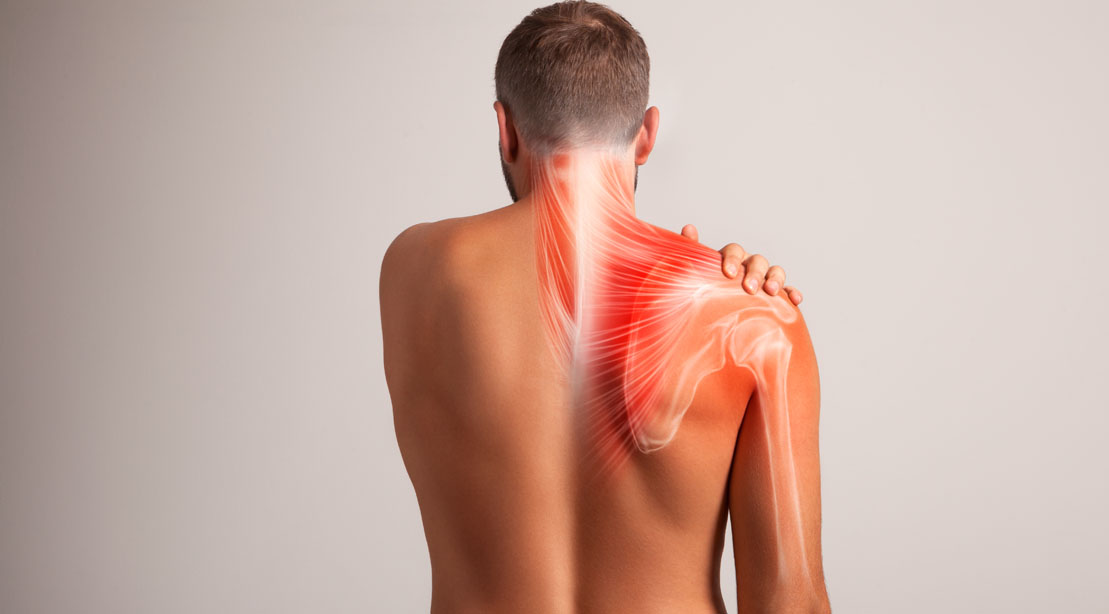
Signs of a winged scapula
It’s important to note that a winged scapula doesn’t automatically mean you’ll have pain. In fact, if you walk around your gym you’ll start to realize how many people have it.
“Increased pronation is usually associated with postural defects that pull the shoulders forward,” Demos says. Tightness in the posterior chain (think, chest muscles) combined with weakness in the posterior chain helps everything move forward, which can result in:
- Shoulder blade extension
- Pain in shoulder, arm and upper back
- Pain around the shoulder blade area
- Limited function of the affected arm and shoulder
- Pain while sitting.
Why is it important to treat winged scapula?
Since the scapula is a relatively unstable bone that is the basis of stability for many movements, it is important to develop the muscles that stabilize our scapula. This adds more strength and stability to an unstable area.
Demos often likens the scapula to a surfboard. “I tell my patients that until we build scapular stability, it’s like trying to do heavy squats on a surfboard in the pool,” he says.
However, if you can develop the muscle that stabilizes our scapula, it’s like doing squats on the same surfboard, but with the surfboard sitting on the concrete path next to the pool. “Our squats are going to be a lot easier to perform, and we’re going to be a lot more powerful when the surfboard is on concrete,” says Demos. It’s a somewhat rudimentary metaphor, but it gets the job done.
In Demos’ experience as a performance therapist, although a winged scapula doesn’t always equate to shoulder pain, shoulder pain in someone with prominent scapula winging can be due to imbalances and even muscle imbalances. Indicates reduced ability to fire.
“When this happens, the amount of space in the glenohumeral joint (aka the shoulder joint) is reduced, and that’s when we get pinch pain, overuse irritation, and here until the initial stages of eruption occur.”
He adds: “As a performance PT, my job is not necessarily to fix their winged scapula, especially winging at rest, but to improve the movements they do every day. are being performed on the basis of”.
An example of this would be – in an overhead press, instead of the scapula rotating upwards and lengthening, it would remain in a downward rotating and internally rotated position. It causes a
The smaller amount of space that the upper arm has to travel before it can effectively move into other structures can cause irritation.
For example, the scapula area works best for overall strength and mobility.
How to Treat a Winged Scapula (Don’t ‘Wing’ It Yourself)
When looking to treat winged scapula, your best bet is to work one-on-one with a physical therapist. Putting it on yourself can do more harm than good.
With all that being said, the main exercises DeMoss focuses on for at least initial recovery is certus activation using:
- Serratus wall slides
- Serratus half-kneeling kettlebell press
- Rotator cuff activation during arm movement
- Periscapular activation (especially middle and lower traps).
“These are best started under the supervision of a PT because most players can’t tell if they are firing in the right areas, but with some feedback, they can learn what it feels like. And then do those exercises yourself.” DeMoss says.
So, while it would be nice to be able to treat winged scapula on our own, professional guidance is the best way to heal and strengthen this area until you know how to do the moves correctly. How to perform and you know what you are looking for. .



0 Comments