
Maybe you grew up hearing about not swimming for 2 hours after eating and now you’re wondering when can I exercise after eating?
Is there a fixed time frame?
Was the 2 hour rule ever true? (hint, no)
Most importantly, I want to make sure you don’t use this as an excuse to continue with fasted cardio. Ladies, we know that long or intense workouts on an empty stomach Destroys our hormones and is detrimental to performance..
So now is the time to start thinking about your meal and snack times to get the most out of your workout.
How long should you wait to exercise after eating?
It depends.
Which is basically the answer to most fitness related questions.
But let’s break it down a little more to help you decide when to go and when to slow your roll.
The main reason for waiting to exercise is that once we start exercising. Blood is diverted from our small intestine (digestive tract) to our working muscles.. This is essential to ensure that our heart, lungs, legs and brain receive enough oxygenated blood to function properly.
Without thinking about time we can end up. Diarrhea, side stitches or nausea after running.
Neither of which is very pleasant. Your body stops digesting efficiently which means food is either sitting in the stomach creating pressure or suddenly ready to pass through you.
To speed up your workout and avoid stomach issues, exercise 1 to 2 hours after a small meal and 30 to 60 minutes after a snack.
But that’s not the whole story, in fact there are four factors that will help answer this question for you for all types of running and exercise situations. But before that, there is one more question that I am often asked.

What happens if you don’t eat before you exercise?
Just as eating right before a workout can be a problem, so can not eating at all before a workout.
To explain this further, I have written a detailed article. Fast Cardio To help you understand its faults and when it is fine.
In general, a registered dietitian Heather Feather stone She said that she does not recommend anyone to exercise while fasting. You are reducing your full potential by not fueling the body and for many people you are actually burning muscle for fuel.
We certainly understand that eating first thing in the morning can be difficult, but it’s worth it. Check out the article above for more ideas on how to get your digestive system to handle food better.
Now, let’s talk about some important tips that will help you time your nutrition so that you can have a well-fueled workout without stomach issues.
A quick guide to exercise after eating
For morning exerciseIt’s often easier to grab a bowl of cereal before a workout and then focus on a slightly larger balanced meal of protein, carbs, and fat for post-workout recovery.
For lunchtime exerciseThink simple carbs before a run and then a protein-rich lunch after.
For evening exercise, consider a small meal that will curb hunger and ensure you don’t get dizzy on the run! This is a common problem for my husband. But grabbing a granola bar before the run also helped a lot.
Is it better to exercise before or after eating?
A good rule of thumb is: If it has been 3-4 hours since you last ate. And if the workout is intense or lasts more than 45 minutes, you absolutely must eat.
Even if it’s half a small sandwich or smoothie, this nutrition will help ensure your muscles have enough energy to exercise and get the most out of your workout.
We also know that Running low on fuel can reduce your recovery time.
That’s right, it will break down more muscle and thus make you feel like your next workout is harder, you may have to cut back on your next workout, or you may just start losing muscle because the body I get swollen.
So at the very least, get in your workout with breakfast.
Factors to consider when deciding how long to wait after eating to exercise
There are four factors that determine how long you should wait after eating to exercise. These are:
- Size and type of food
- Time of day and gut health
- Exercise intensity
- Your personal experiences
Let’s consider each of them in more detail:
1. Food size
Yes, the size and type of food is going to be an important factor.
- Foods high in fiber and/or high in fat often take longer to digest and thus 1-2 hours From food to exercise
- A large meal of protein sitting in your stomach when you start jumping around will absolutely cause problems and find out again. 2 hour window
- Dahi and others Dairy products Often recommended, but major trigger foods for many people with upset stomachs
- Low-fiber foods are great snacks when you need quick fuel to get you started – think crackers, toast.
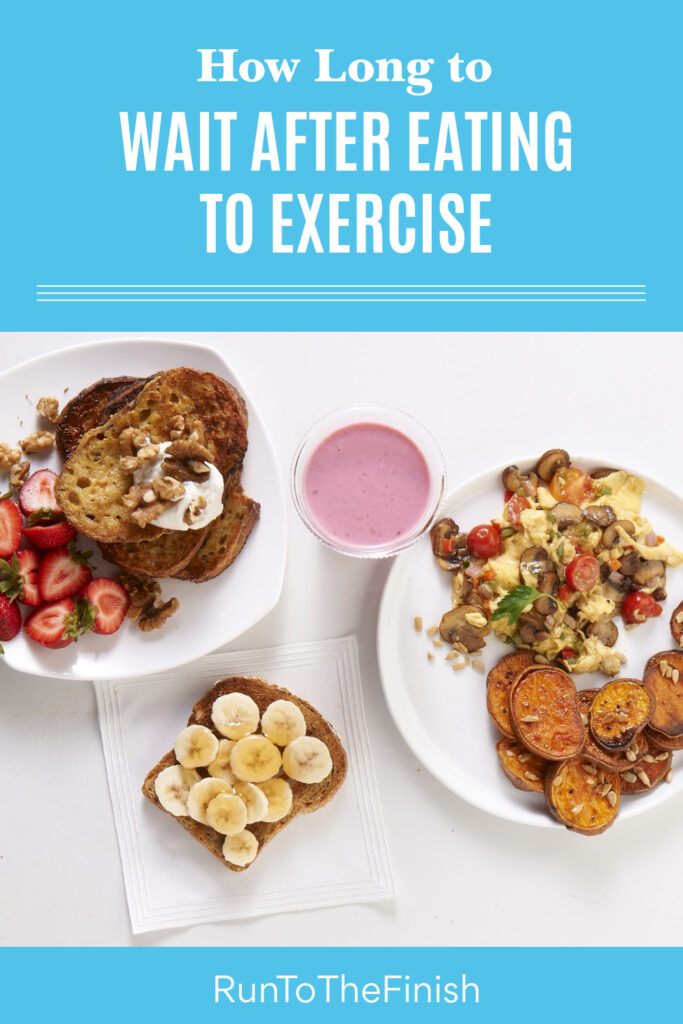
- A 100-200 calorie snack (a banana or a bagel with 1 tablespoon of nut butter) is usually a quick fix within 30 minutes of running.
Check out the best pre-workout snack ideas >>
What happens if you exercise right after eating?
Usually nothing more than a few. Uncomfortable feelings This could include hanging your head over a trash can if it was a large enough meal and exercise was difficult.
In swimming, the hour window was thinking about this idea of muscle soreness.
If the blood was still working on digestion, you would be more likely to have muscle cramps and well… you would drown in the scene.
This doesn’t seem to be a problem for anyone playing in the pool or ocean, as we’ve noted. The body wants to push blood to your muscles. Because they are demanding the most attention.
It’s rare to say that exercising right after a meal causes muscle soreness, though Side stitch while running.
2. Time of day and gut health
The timing of your meals can play a big role in how much you can consume.
- You can easily sneak into a carb-packed bowl of oatmeal for breakfast because your stomach isn’t full or currently digesting the previous meal.
- Due to stress and perhaps less than stellar food choices during the day, digestion can be more sluggish by evening. Thus more problems with eating something before your sweat session.
- Fast food! How early you eat lunch or how fast you eat while trying to fit in that workout… this will also lead to more stomach issues during the workout.
One thing that helps many people is to improve overall gut health by taking a high-quality probiotic.
A general guideline is to avoid overeating, but respect your hunger.

3. Exercise intensity
Now we get to the real meat of the situation. (I can’t give a good sentence.)
How hard is the workout you’re going to do? And how new or experienced are you with exercise?
- Longer runners are often able to eat more or sooner before easy runs because they have adapted.
- Anyone who does HIIT runs or hard intervals is working overtime with the wrong foods.
- Weightlifters may find that they are less prone to stomach problems due to the lack of bouncing and jerking.
If you’ve been in a consistent exercise routine for years, your body may be more adaptable.
But these fast-paced movements only cause the entire digestive system to move too much, leading to reflux or vomiting at the gym…which I prefer to avoid.
4. Previous experiences
The final factor that may be most important is what you experience when you exercise after eating.
Try keeping a food log. Or making notes around your workouts to see what side effects they have.
- how much did you eat
- How long before exercise?
- What kind of food did you eat? Spicy? Fried? fat Lots of vegetables?
If you’ve logged in and can’t find the culprit, feel like everything is making you feel sick, then it’s time to work with a registered dietitian. Lydia Nader.
Sports nutritionists in particular have helped many people work through the same things and come out the other side feeling stronger and happier with their workouts.
What should I eat before I exercise?
How you eat before exercise depends on how your body breaks down your food and how long and hard you work out. Therefore, eating right can help you speed up your workouts, improve your performance and speed up your recovery.
I have discussed all the important factors like timing, intensity, gut health, size, and food type as well as your previous experience in this article above, so always refer to it. But here are the ingredients that go into a balanced pre-workout meal:
Carbohydrates
Complex carbohydrates, such as whole grains, beans and vegetables, provide energy to fuel your workout. However, they can take longer to digest, making them a better option several hours before exercise.
Protein
Protein is essential for muscle growth and repair. Protein can be found in lean meats, fish, dairy, beans and other foods.
Healthy fats
A balanced diet should include healthy fats, such as those found in nuts, seeds and fish. As with complex carbohydrates, they take longer to digest and are a better choice to eat several hours before exercise.
If you’re looking for some great, tried and tested ideas by a running coach, this is it leader I have written Pre-workout snacks Best for you! It includes 19 snack ideas you can try, as well as tips and information that will answer all your questions!
What foods should I avoid before exercising?
Pre-workout snacks should be chosen with digestion time in mind. High fiber, high protein and high fat foods take longer to break down. If you want to keep your energy levels stable, it’s a good idea to limit sugary foods.
And, as I mentioned above, you can also change your pre-workout diet based on what you know about your digestive system and how it reacts to different foods.
If you have a history of acid reflux or heartburn during exercise, you should stay away from anything that can trigger these symptoms.
Some foods that can cause such problems include spicy foods, fatty foods, chocolate, caffeine, and even citrus fruits. Again, I recommend keeping a food journal to learn what works and what doesn’t for you and your body.
This process can feel like a bit of trial and error, but it’s worth it and will save you a ton of trouble down the line, especially when you’re involved in marathons and other types of races.
What foods should I eat after running?
To help you answer this question, I have written The complete guide that includes 29 post-run meal ideas That I’m sure you’re going to absolutely love.
This guide is also great if you want to know what to do after a marathon, as it’s definitely something every aspiring marathon runner should learn.
Okay, now that I’ve covered everything you need to know about how long to wait to eat before exercising, here are some other resources I know you’ll need. Would love it!
Other ways to connect with Amanda
Instagram Daily Fun: RunToTheFinish
Facebook Community Chatter: RunToTheFinish

Sign up to receive a weekly newsletter with top running tips. And laugh



0 Comments